
 Pin it
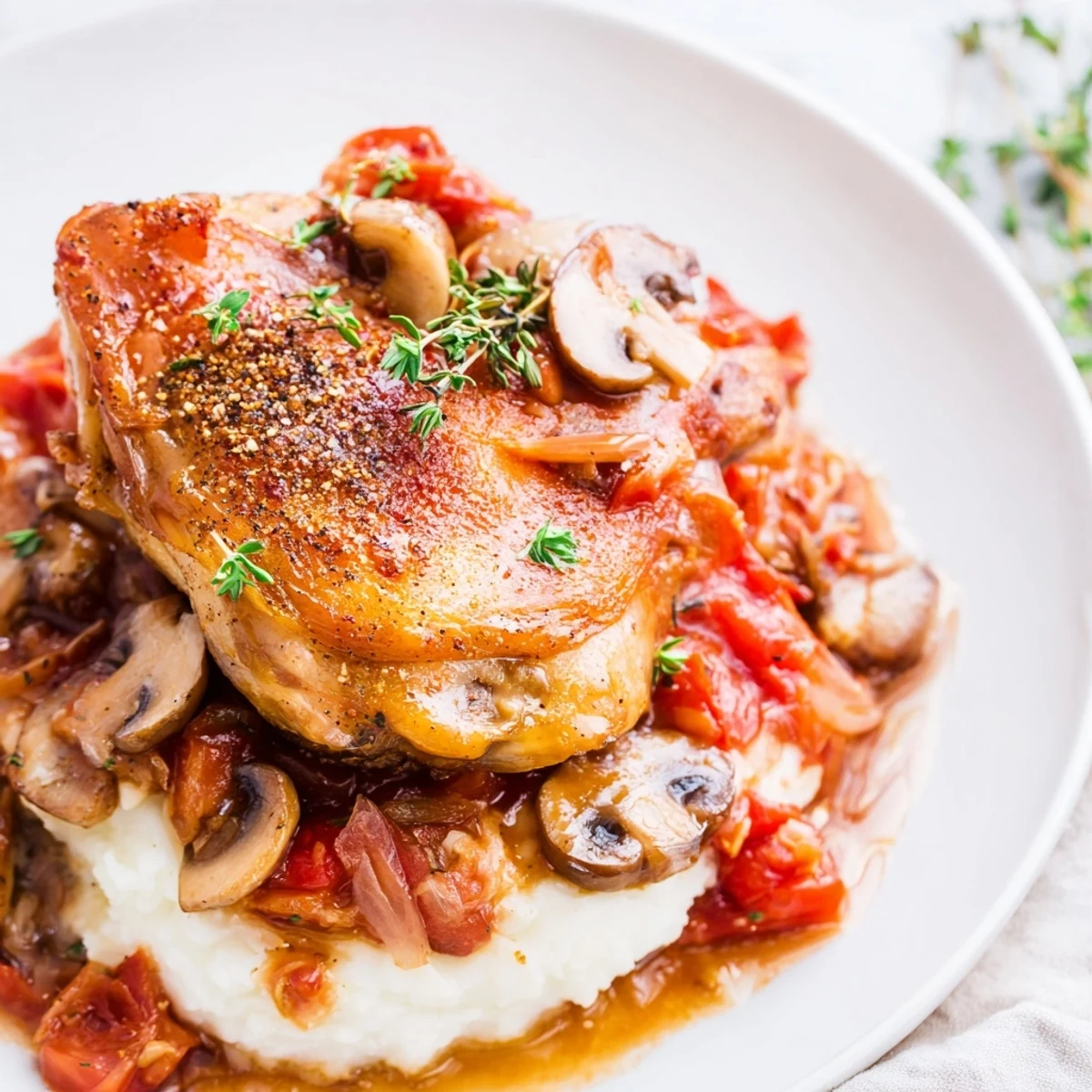
 This classic French poulet chasseur features bone-in, skin-on chicken seared until golden, then simmered with onions, garlic, mushrooms, tomatoes and dry white wine. Fresh thyme and bay leaves deepen the sauce; finish with parsley. The short braise yields tender meat and a glossy, savory sauce—serve with mashed potatoes, crusty bread or buttered noodles.
The rain was hammering against the kitchen window the afternoon I first attempted Poulet Chasseur, and honestly that gloomy weather made it the perfect day to learn. My neighbor Madame Renard had mentioned it offhand, calling it the kind of dish French grandmothers make when they want comfort without fuss. The smell that filled my apartment two hours later, tomatoes and wine and thyme all braided together, convinced me she was underselling it.
I served this to my brother on one of his surprise visits, the kind where he shows up hungry and pretending he is not starving. He went quiet after the first bite, which is the highest compliment in our family. By the end of the meal he was scooping sauce directly from the pan with a chunk of bread, manners entirely abandoned.
Ingredients
- Bone in, skin on chicken thighs and drumsticks (8 pieces total): The bone keeps the meat juicy during the long simmer, and the skin renders fat that flavors the entire pan.
- Large onion, finely chopped: Onion forms the sweet base that balances the acidity of the tomatoes and wine.
- Garlic cloves, minced: Two cloves is a starting point, but nobody will judge if you add a third.
- White mushrooms, sliced: They soak up the wine and stock like little sponges, becoming almost meaty in texture.
- Canned diced tomatoes: A good quality can beats fresh tomatoes here, since the long simmer would break down fresh ones too much.
- Tomato puree: This concentrates the tomato flavor and gives the sauce a deeper color.
- Dry white wine: Something you would drink on its own, nothing sweet, nothing too oaky.
- Chicken stock: Low sodium if possible, so you can control the salt level yourself.
- Olive oil and unsalted butter: The combination gives you a higher smoke point from the oil plus the rich flavor of butter.
- Fresh thyme and bay leaves: These two herbs are the quiet backbone of classic French cooking, subtle but essential.
- Fresh parsley, chopped: Save this for the very end, scattered on top so it stays bright and grassy.
- Salt and black pepper: Season gradually and taste as you go.
Instructions
- Season and sear the chicken:
- Pat the chicken pieces dry and season both sides generously with salt and pepper. Heat the olive oil and butter in a large Dutch oven over medium high heat until the butter foams, then lay the chicken in skin side down and let it cook undisturbed until the skin turns a deep golden brown, about five minutes per side. Remove the pieces to a plate and try not to sneak a bite.
- Build the vegetable base:
- In the same pan with all those gorgeous chicken drippings, add the chopped onion and cook until it turns translucent and soft around the edges. Toss in the garlic and mushrooms, stirring occasionally, until the mushrooms give up their liquid and start to brown lightly.
- Toast the tomato puree:
- Stir in the tomato puree and let it cook for about a minute until it darkens slightly and smells deeply sweet. This small step makes a real difference in the depth of the finished sauce.
- Deglaze with wine:
- Pour in the white wine and use a wooden spoon to scrape up every bit of browned goodness stuck to the bottom of the pan. Let it bubble and reduce for about two minutes until the sharp alcohol smell fades.
- Simmer everything together:
- Add the diced tomatoes, chicken stock, thyme, and bay leaves, then nestle the chicken pieces back into the pan skin side up. Bring it to a gentle simmer, cover with a lid, and let it cook on low heat for thirty minutes while your kitchen fills with an incredible smell.
- Finish uncovered:
- Remove the lid and let the sauce bubble away uncovered for another ten to fifteen minutes until it thickens and coats a spoon. The chicken should be fork tender and the sauce should taste rich and balanced.
- Finish and serve:
- Fish out the bay leaves and discard them. Scatter the chopped parsley over the top and serve directly from the pot with something starchy to soak up all that sauce.
 Pin it
 There is something about a pot of hunters chicken bubbling away on the stove that turns an ordinary Tuesday into an occasion worth remembering. It has become my cold weather answer to the question of what to cook when I want the house to smell incredible and the table to feel generous.
Serving Suggestions That Actually Work
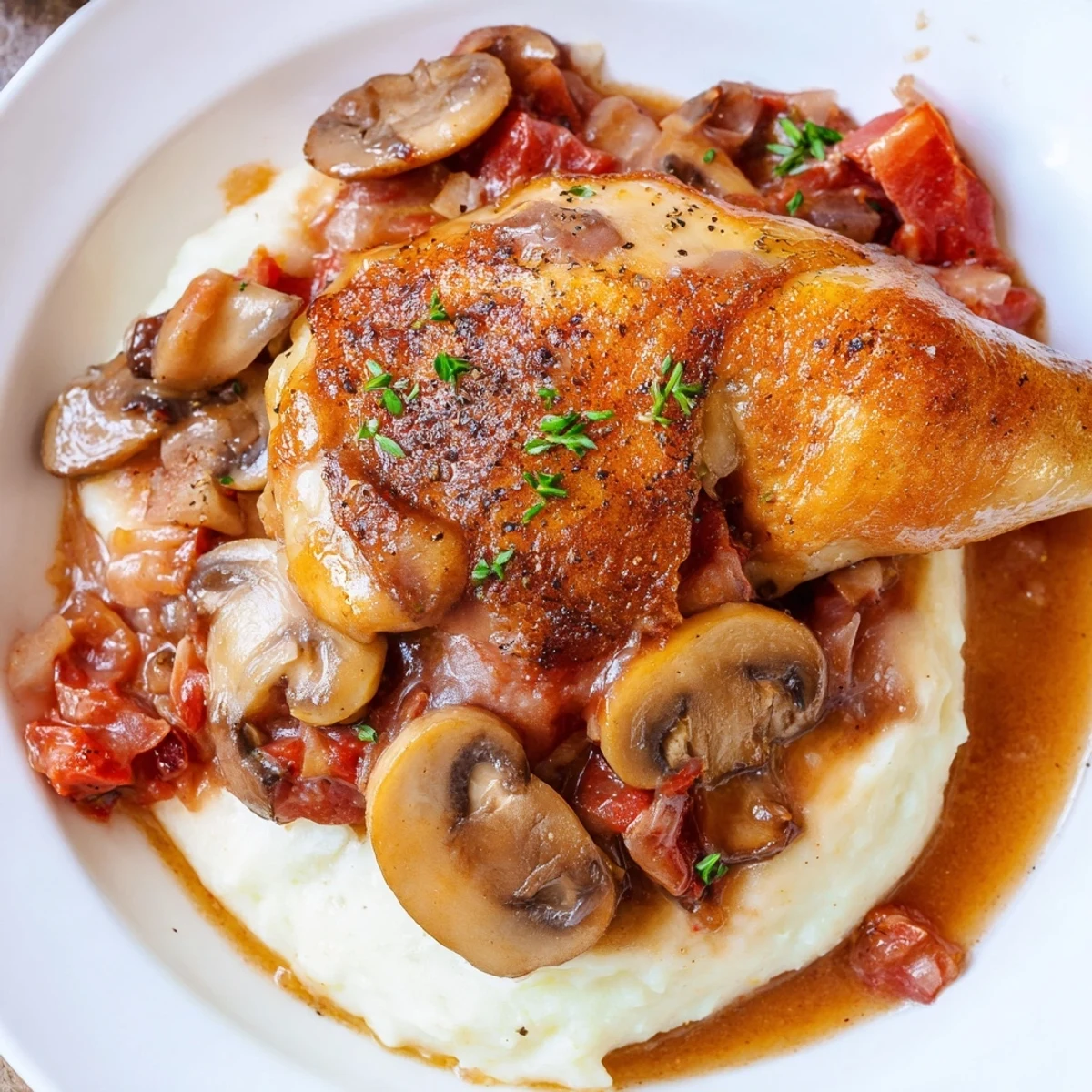
Mashed potatoes are the classic pairing and they are classic for a reason, because that buttery pile is the ideal vehicle for spooning up every last drop of sauce. Crusty bread works just as well if you want something simpler, torn straight from the loaf and used to mop the plate clean. Buttered egg noodles are my personal favorite, especially on nights when I want the meal to feel a little more substantial without much extra effort.
Mushroom Choices Matter
White button mushrooms are traditional and perfectly fine, but cremini mushrooms bring a deeper earthy flavor that pairs beautifully with the wine and thyme. If you happen to find wild mushrooms like chanterelles or oysters at the market, a handful mixed in will make this dish taste like it came from a countryside auberge. Just slice them roughly the same size so everything cooks evenly.
Wine Pairing and Storage Thoughts
A white Burgundy is the textbook match for this dish, echoing the wine already in the sauce and complementing the richness of the chicken. A medium bodied red like a Côtes du Rhône works beautifully too, especially on evenings when red feels more appropriate. Whatever you pour into the pan should be something you are happy to pour into your glass alongside it.
- Leftovers keep well in the refrigerator for up to three days and the sauce will thicken as it sits.
- Reheat gently on the stovetop over low heat rather than using the microwave to keep the chicken skin from going rubbery.
- Always check labels on chicken stock and wine if gluten is a concern for anyone at your table.
 Pin it
 Keep this recipe close for the nights when you need dinner to feel like a warm conversation with an old friend. It never lets me down.
Recipe FAQ
- → How do I get crispy skin on the chicken?
-
Pat the skin dry and season well. Sear skin-side down in hot oil and butter without moving the pieces until deeply golden to render fat. Work in batches to avoid crowding so the surface browns evenly.
- → Can I use boneless chicken instead of bone-in?
-
Yes, but boneless cuts cook faster and may yield a slightly leaner texture. Reduce braise time and check doneness early to avoid drying. Bone-in pieces give more flavor to the sauce during the simmer.
- → Which mushrooms work best?
-
Cremini or button mushrooms are classic and absorb flavor well. For earthier notes, use wild mushrooms or porcini. Slice larger mushrooms so they brown and keep their texture during the braise.
- → How can I thicken the sauce without flour?
-
Simmer uncovered to concentrate and reduce the liquid for a glossy sauce. For extra richness, whisk in a spoonful of crème fraîche or finish with a knob of butter off the heat. A cornstarch slurry also works if needed.
- → What can I substitute for white wine?
-
Use additional low-sodium chicken stock with a splash of white wine vinegar or sherry for acidity. Dry vermouth or a nonalcoholic white wine alternative can also provide a similar bright note.
- → Can this be made ahead and stored?
-
Yes. Flavors often deepen after resting; refrigerate for up to 3 days. Reheat gently on the stovetop over low heat, adding a splash of stock if needed to loosen the sauce. Freeze portions for longer storage.