
 Pin it
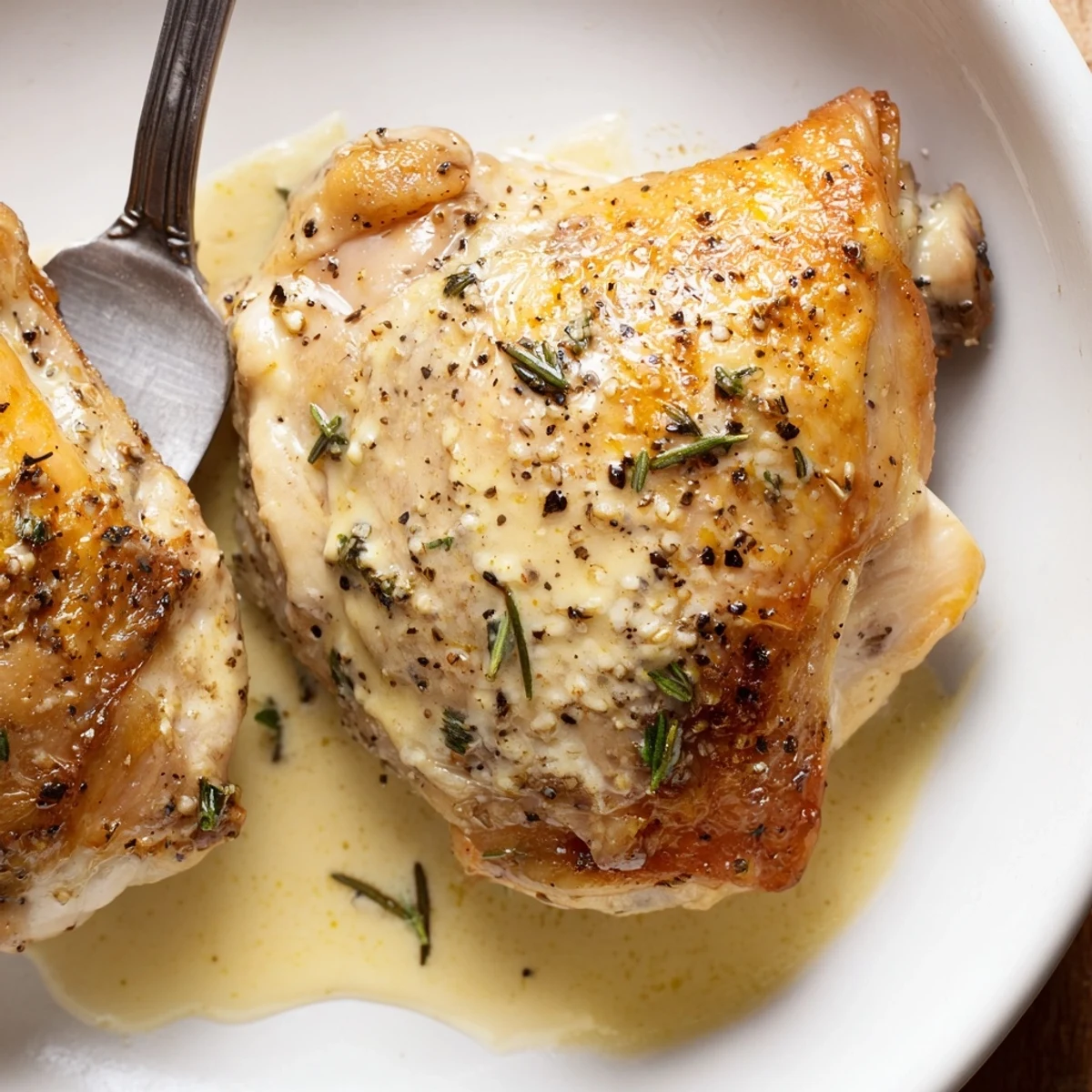
 Pat and season bone-in, skin-on chicken thighs, then sear skin-side down in olive oil and butter until deeply golden. Sauté shallot and garlic in the same pan, deglaze with chicken broth and reduce briefly. Stir in heavy cream, thyme, rosemary and half the parsley, return the thighs skin-side up, spoon sauce over them and finish in a 400°F oven until cooked through. Rest, sprinkle remaining parsley and serve with mashed potatoes, rice or crusty bread.
The rain was hammering against the kitchen window so hard that evening that I almost did not hear the sizzle when the chicken hit the pan. I had grabbed a pack of thighs on impulse, driven by nothing more than a craving for something rich and garlicky. What came out of the oven forty five minutes later was the kind of meal that makes you close your eyes at the table. My partner looked up from the plate and simply said nothing else is happening tonight, and that was enough.
I have made this on weeknights when the fridge looked bare and on lazy Sunday afternoons when cooking felt like therapy instead of chores. Every single time someone new tries it they ask for the recipe, and I pretend it is more complicated than it actually is.
Ingredients
- 8 bone in, skin on chicken thighs: The skin is non negotiable because it protects the meat during searing and gives you that gorgeous golden crust.
- 1 cup heavy cream: This is the backbone of the sauce and half and half will work but the texture will not be quite as luxurious.
- 2 tablespoons unsalted butter: Combined with olive oil it creates a fat blend that browns the skin without burning.
- 6 cloves garlic, minced: Six sounds like a lot until you taste the sauce and wish you had added two more.
- 1 medium shallot, finely chopped: Shallot adds a sweetness that onion simply cannot match here.
- 3/4 cup low sodium chicken broth: Low sodium matters because the reduction concentrates every grain of salt.
- 2 tablespoons fresh parsley, chopped: Save half for finishing because the raw parsley on top brings brightness the cooked herbs lose.
- 1 tablespoon fresh thyme leaves: Thyme and chicken are old friends and you taste that friendship in every bite.
- 1 tablespoon fresh rosemary, chopped: A little goes a long way so chop it fine to distribute the piney flavor evenly.
- 1/2 teaspoon salt and 1/2 teaspoon black pepper: Season generously on both sides of each thigh before searing.
- 1 tablespoon olive oil: Just enough to keep the butter from smoking in the hot skillet.
Instructions
- Crank the oven:
- Set it to 400°F and let it fully preheat because a hot oven is what finishes the chicken without drying it out.
- Dry and season the thighs:
- Grab paper towels and pat every thigh completely dry, then season both sides with salt and pepper while the skillet heats.
- Build the sear:
- Heat olive oil and butter in a large ovenproof skillet over medium high heat until the butter stops bubbling, then lay the thighs in skin side down and do not touch them for five to six minutes.
- Flip and rest:
- Flip each thigh, cook two more minutes, then transfer them to a plate while you build the sauce in the same pan.
- Wake up the aromatics:
- Toss the shallot and garlic into the rendered fat and stir for one to two minutes until your kitchen smells like a restaurant kitchen at eight pm.
- Deglaze the pan:
- Pour in the chicken broth and scrape up every browned bit stuck to the bottom because that is concentrated flavor you do not want to lose.
- Build the cream sauce:
- Reduce the heat to low, stir in the heavy cream, thyme, rosemary, and half the parsley, then taste and adjust the salt.
- Nestle the chicken back in:
- Place the thighs skin side up in the sauce and spoon a little over each one so the meat absorbs the flavor while the skin stays above the liquid.
- Finish in the oven:
- Transfer the skillet to the oven and bake fifteen to eighteen minutes until the internal temperature reads 165°F at the thickest part.
- Serve with flair:
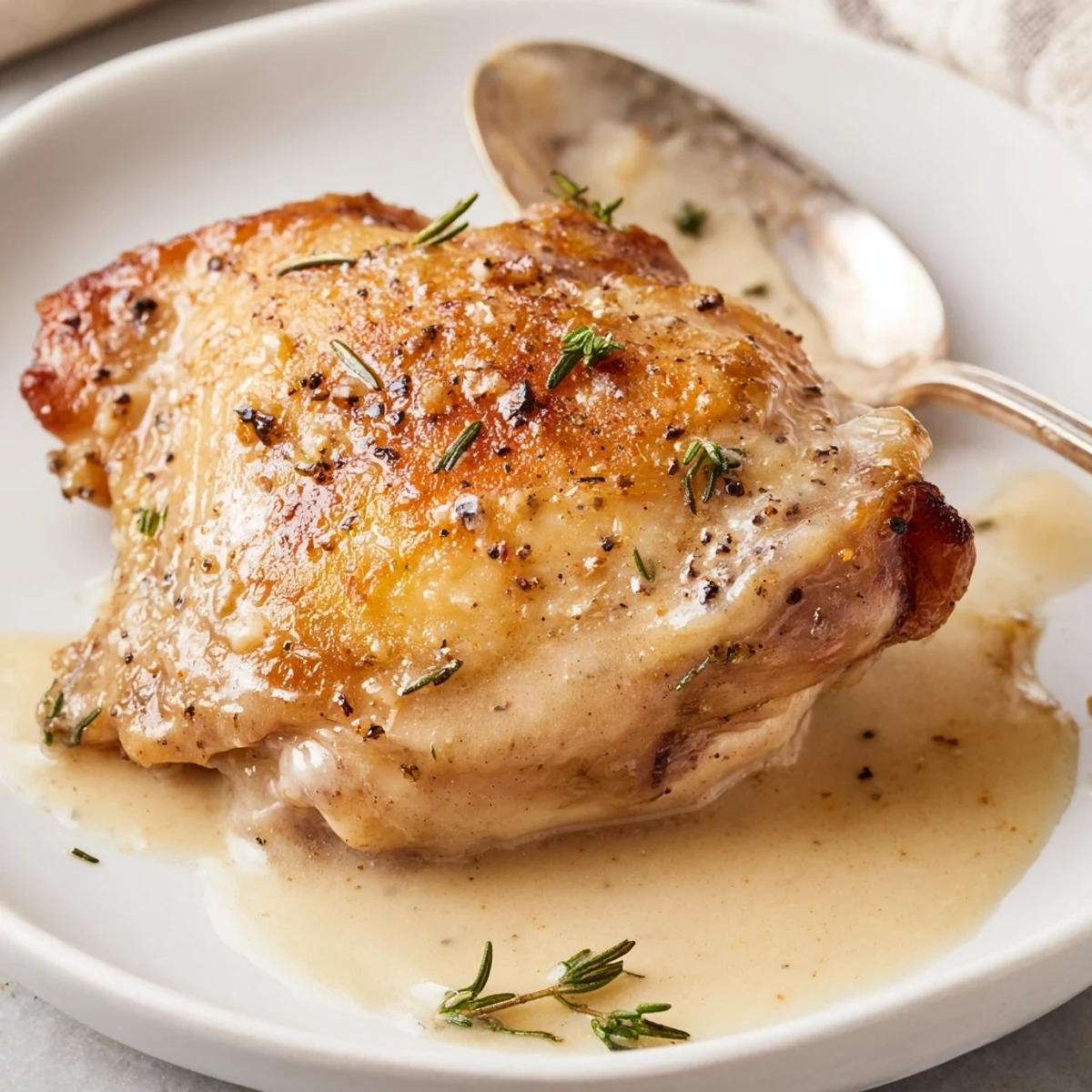
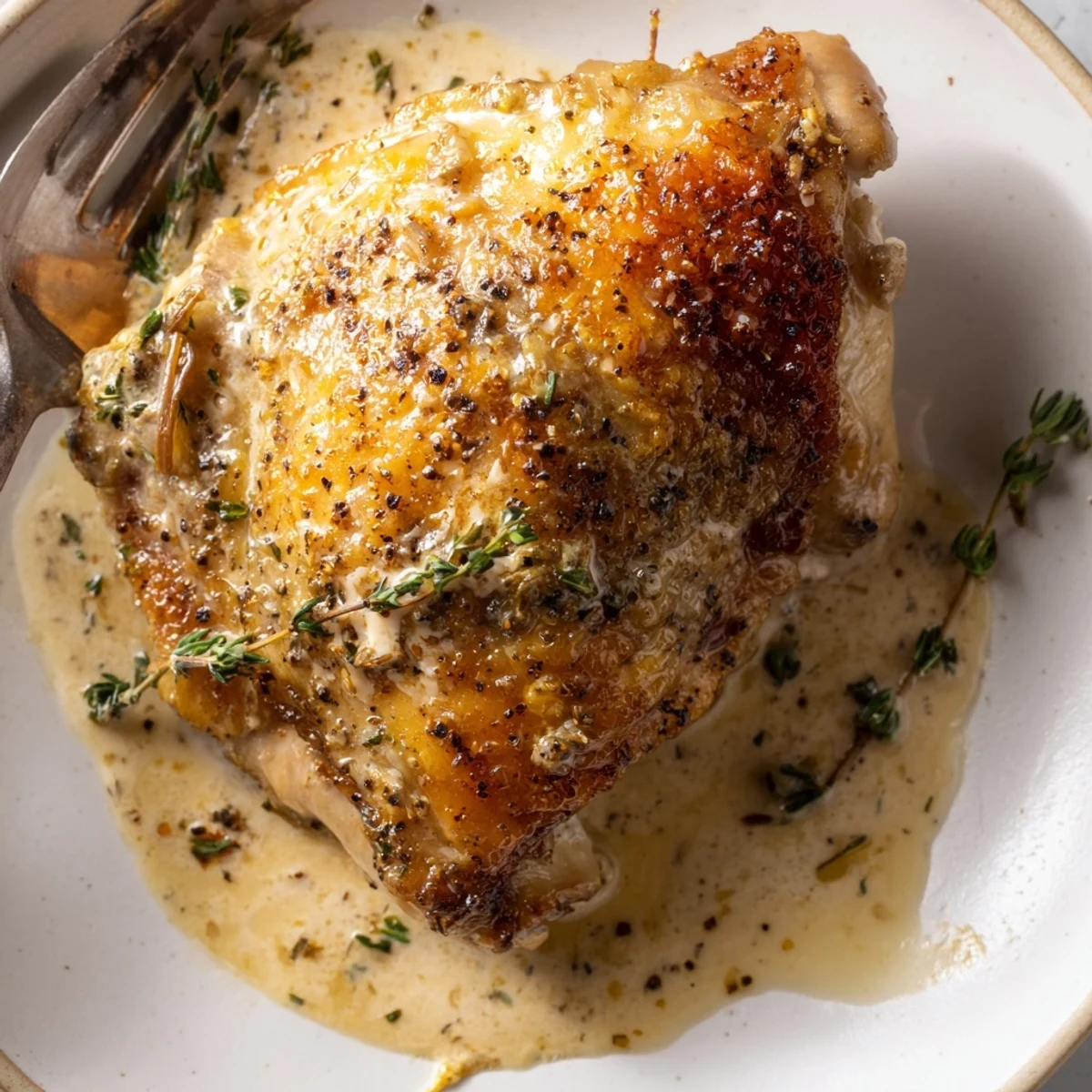
- Pull from the oven, scatter the remaining parsley across the top, and bring the whole skillet to the table so everyone can see the golden skins resting in that creamy sauce.
 Pin it
 The first time I served this to my mother in law she went quiet after the first bite and I panicked for a full ten seconds before she asked for seconds. That skillet, scraped clean, told me everything I needed to know about whether the recipe was worth keeping.
What to Serve Alongside
Mashed potatoes are the obvious choice because they give you something to soak up every drop of sauce, but crusty bread works just as well when you want less effort. Rice is quietly excellent too, especially if you let the sauce drizzle down into each grain. On warmer evenings I have even served it over a simple bed of buttered egg noodles and nobody complained.
Playing With the Herbs
The thyme and rosemary combination is classic for a reason but this recipe forgives experimentation beautifully. Tarragon brings a faint anise sweetness that pairs surprisingly well with garlic cream. Fresh basil stirred in at the very end adds a summery softness that makes the whole dish feel lighter, even though we both know it is not.
Getting Ahead and Storing Leftovers
You can sear the chicken and make the sauce a few hours ahead then keep them separately in the fridge until dinner time approaches. Leftovers reheat gently in a covered skillet over low heat and the sauce actually tastes better the next day when the herbs have had time to mingle. I would not keep them beyond two days though because the cream sauce starts to separate and the magic fades.
- Always let the skillet come to room temperature before adding cold cream to avoid shocking the sauce.
- A squeeze of lemon juice at the end can rescue a sauce that feels too heavy.
- Remember that the sauce thickens as it sits so serve promptly for the best texture.
 Pin it
 Some meals you forget by the next morning but this one has a way of staying with you, mostly because of that moment when you pull the bubbling skillet from the oven and the kitchen smells like the best version of home. Make it once and it will quietly become part of your rotation without asking permission.
Recipe FAQ
- → How do I get extra-crispy skin on the thighs?
-
Pat the skin very dry before seasoning and use a hot skillet with oil and butter. Sear skin-side down without moving for 5–6 minutes until deeply golden, then finish in the oven to render fat and preserve crispness.
- → Can I use boneless thighs instead of bone-in?
-
Yes, boneless thighs cook faster and will still be flavorful, but reduce oven time and check doneness earlier to avoid overcooking; a few extra minutes of searing helps develop color.
- → What can I substitute for heavy cream?
-
For a lighter finish, use half-and-half or a blend of milk and a small amount of butter. The sauce will be less rich and slightly thinner; reduce gently to thicken if needed.
- → How do I know when the chicken is safely cooked?
-
Cook until the internal temperature reaches 165°F (74°C) at the thickest part. Alternatively, juices should run clear and the meat should no longer be pink near the bone for bone-in thighs.
- → Can the dish be prepared ahead of time?
-
Yes. Sear the thighs and prepare the sauce, then cool and refrigerate separately. Reheat gently in a low oven or on the stovetop, finishing in the oven to crisp the skin before serving.
- → What side dishes and wines pair well?
-
Serve with mashed potatoes, rice or crusty bread to soak up the sauce. A Chardonnay or Sauvignon Blanc complements the creamy garlic and herb flavors nicely.