
 Pin it
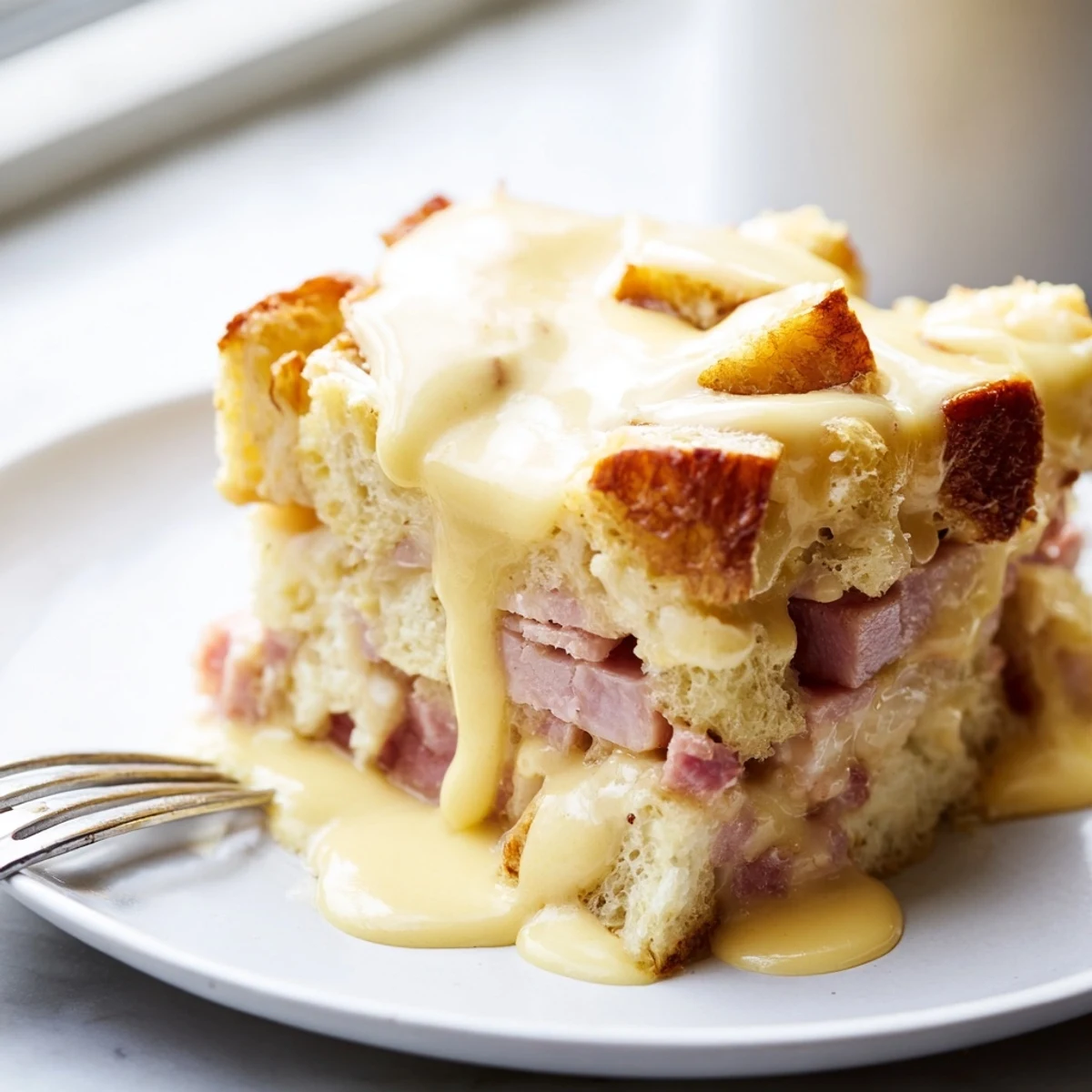
 This eggs Benedict casserole transforms the classic brunch dish into a convenient bake that feeds six. Cubed English muffins and chopped Canadian bacon are layered in a 9x13 dish, then soaked in a savory custard of eggs, milk, and Dijon mustard.
After a brief chill to let everything meld together, it bakes until puffed and golden. A from-scratch hollandaise sauce—whisked over a double boiler with egg yolks, butter, and lemon—gets drizzled over each serving.
The whole dish comes together with about 20 minutes of hands-on prep and 45 minutes in the oven, making it an ideal choice for holiday mornings or lazy weekend gatherings.
Sunday mornings in my kitchen have a rhythm all their own, usually starting with coffee and ending with a sink full of dishes I swore I would not make. One particularly lazy weekend, I stared at a half dozen English muffins going stale on the counter and a carton of eggs that needed using, and somewhere between the first and second cup of coffee, this casserole was born. It has since become the dish my friends text me about on Saturday nights, asking if I am making that egg thing again.
My friend Laura brought a bottle of cheap champagne the first time I served this, and we ended up sitting around the table until noon, trading stories and refilling mimosas while the casserole dish sat empty in the middle of it all. That is the real magic of a dish like this. It is not just breakfast, it is an excuse to linger.
Ingredients
- 6 English muffins, split and cut into 1 inch pieces: The nooks and crannies soak up the custard beautifully, and slightly stale muffins actually work better than fresh ones.
- 12 oz Canadian bacon, chopped: It lends a gentle smokiness without overwhelming the dish the way regular bacon might.
- 8 large eggs (for the casserole): These form the rich custard base that binds everything together as it bakes.
- 2 cups whole milk: Whole milk is non negotiable here, as anything lower in fat leaves the texture a bit thin and sad.
- 1 tsp Dijon mustard: Just a teaspoon adds a quiet warmth that most people cannot quite identify but everyone misses when it is gone.
- Half tsp salt: Balances the richness and helps the egg mixture penetrate the muffins evenly.
- Quarter tsp ground black pepper: Freshly cracked is always worth the extra ten seconds.
- Quarter tsp paprika: A subtle background note and a blush of color on top.
- 2 tbsp unsalted butter, melted: Stirred into the custard for added richness and a hint of golden browning.
- 4 large egg yolks (for hollandaise): The foundation of a silky, thick sauce that coats the back of a spoon.
- Half cup unsalted butter, melted (for hollandaise): Pour it in slowly and steadily, as patience here prevents a broken sauce.
- 1 tbsp lemon juice: Brightens the hollandaise and cuts through all that buttery richness.
- Half tsp Dijon mustard (for hollandaise): Helps stabilize the emulsion and adds depth.
- Salt and pepper, to taste: Season the hollandaise at the very end, tasting as you go.
Instructions
- Prep the oven and dish:
- Heat your oven to 350 degrees F and grease a 9 by 13 inch baking dish with butter or cooking spray, making sure to get into the corners.
- Build the layers:
- Scatter half the muffin pieces across the bottom, then sprinkle half the chopped Canadian bacon over them. Repeat with the remaining muffins and bacon, creating two distinct layers.
- Whisk the custard:
- In a large bowl, whisk together the eggs, milk, Dijon, salt, pepper, paprika, and melted butter until completely smooth and uniform in color.
- Soak everything:
- Pour the egg mixture slowly and evenly over the layered muffins and bacon, then press down gently with your hands or a spatula so every piece gets a chance to absorb the liquid.
- Chill patiently:
- Cover tightly with foil and refrigerate for at least one hour, though overnight truly gives the best texture as the custard seeps into every cranny.
- Bring to temperature:
- If you chilled it overnight, let the casserole sit on the counter while the oven preheats so the baking dish does not crack from a sudden temperature change.
- Bake covered, then uncovered:
- Bake covered with foil for 30 minutes, then remove the foil and bake another 15 minutes until the center is set and the top has turned a lovely pale gold.
- Make the hollandaise:
- Set a heatproof bowl over a saucepan of barely simmering water, whisk the yolks and lemon juice together, then slowly drizzle in melted butter while whisking constantly until the sauce thickens to a glossy coating consistency.
- Finish and serve:
- Stir the Dijon into the hollandaise, season with salt and pepper, and remove from heat. Let the casserole rest ten minutes before slicing into squares and spooning hollandaise over each portion generously.
 Pin it
 There is something deeply satisfying about pulling a golden bubbling casserole from the oven when the house still feels quiet and the coffee is fresh. It transforms an ordinary morning into something that feels planned and generous without requiring you to be a morning person.
Making It Your Own
This recipe is remarkably forgiving when you want to play around. Try tucking sauteed spinach and a handful of cherry tomatoes between the layers for extra color, or scatter fresh chives over the top just before serving. A vegetarian friend of mine swears by smoked tempeh in place of the Canadian bacon.
What to Serve Alongside
A simple arugula salad with lemon vinaigrette cuts through the richness beautifully, and roasted potatoes on the side never hurt anyone. If you are leaning into the brunch theme, pour some sparkling wine into orange juice and call it a celebration.
Handling Leftovers
This casserole reheats surprisingly well in a low oven, though the hollandaise is best made fresh each time you serve it. Store them separately and you will thank yourself the next morning.
- Wrap leftover casserole tightly and refrigerate for up to three days.
- Reheat individual portions at 325 degrees F for about fifteen minutes.
- Never attempt to microwave leftover hollandaise, as it will break and break your heart.
 Pin it
 Some dishes feed people, and some dishes bring them to your table and keep them there. This one does both, and it asks almost nothing of you in return.
Recipe FAQ
- → Can I assemble this casserole the night before?
-
Yes, in fact it's recommended. After pouring the egg mixture over the muffin and bacon layers, cover tightly with foil and refrigerate overnight. This gives the English muffins time to fully absorb the custard, resulting in better texture. Just let it sit at room temperature for about 20 minutes before baking.
- → How do I prevent the hollandaise sauce from breaking?
-
Keep the heat gentle—use barely simmering water in your double boiler, never a rolling boil. Add the melted butter very slowly in a thin stream while whisking constantly. If the sauce starts to look grainy or separate, whisk in a teaspoon of warm water to bring it back together.
- → What can I substitute for Canadian bacon?
-
Chopped ham steak works well as a direct swap. For a vegetarian version, use smoked tempeh, sautéed mushrooms, or simply layer in extra vegetables like spinach and roasted red peppers for substance and flavor.
- → Can I use store-bought hollandaise instead of making it from scratch?
-
Absolutely. A good-quality packaged hollandaise will save time and still taste great drizzled over the casserole. Warm it gently according to the package directions before serving. Homemade hollandaise will be richer and more tangy, but the casserole is delicious either way.
- → How should I store and reheat leftovers?
-
Store leftover casserole in an airtight container in the refrigerator for up to three days. Reheat individual portions in the microwave at 50% power for about 90 seconds, or warm the whole dish covered with foil in a 325°F oven for 15-20 minutes. Store hollandaise separately and make fresh if possible, as reheated hollandaise can break.
- → What side dishes pair well with this casserole?
-
Roasted breakfast potatoes or hash browns are a natural match. A light green salad with a vinaigrette helps balance the richness. Fresh fruit, roasted asparagus, or a simple arugula salad with lemon dressing also complement the creamy, eggy flavors beautifully.