
 Pin it
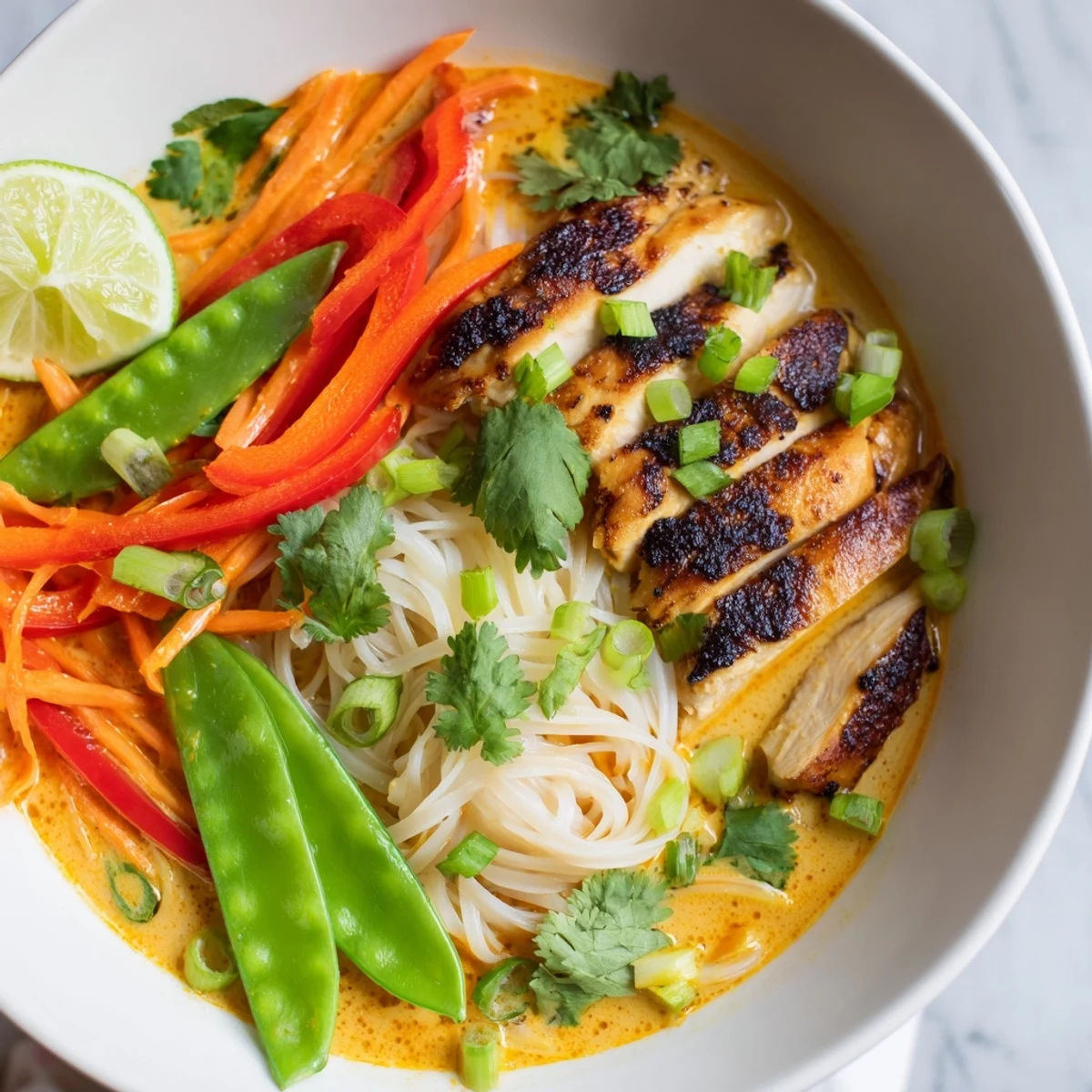
 This dish features tender grilled chicken paired perfectly with silky rice noodles, all swimming in a rich, aromatic Thai red curry coconut broth. The curry balances creamy coconut milk with spicy red curry paste, enhanced by fresh ginger, garlic, and bright lime juice. Crisp vegetables like bell pepper, snap peas, and carrots add texture, while garnishes of cilantro and green onions bring fresh flavor. It’s a comforting, medium-difficulty main that takes about 50 minutes to prepare and serves four.
One humid evening, I stood in my kitchen watching steam rise from a pot of something I wasn't quite sure about, when my Thai neighbor knocked on the door with leftovers from her family dinner. She took one look at what I was attempting and laughed, then stayed for two hours teaching me how curry broth should smell—not bitter, but warm and welcoming, with coconut settling in like a soft background voice. That night became the blueprint for this soup, which I've since made dozens of times, each bowl tasting like both her kindness and my own growing confidence in the kitchen.
I made this soup for a dinner party once when someone mentioned they couldn't eat dairy, and I watched faces light up as they realized something this good could exist without it. A guest asked for the recipe before even finishing their bowl, which never happens at my table. That moment taught me that restrictions in the kitchen aren't limitations—they're actually invitations to get creative.
Ingredients
- Chicken breasts: Boneless and skinless cook fast and stay tender when marinated; the soy-lime mixture seeps into the meat and makes grilling a breeze.
- Soy sauce: The umami anchor for the marinade—use full-sodium if you want that savory depth, or go low-sodium if you prefer control over saltiness.
- Lime juice: Acid breaks down the chicken while adding brightness; fresh squeezed makes all the difference.
- Sesame oil: Just a teaspoon prevents the marinade from tasting one-note and adds a subtle nuttiness.
- Rice noodles: Medium or wide work equally well; they soften perfectly in hot broth without turning mushy if you don't overdo the cooking time.
- Thai red curry paste: This is where the magic happens—it's concentrated flavor, so start with 2 tablespoons and add more only if you want serious heat.
- Coconut milk: Full-fat is non-negotiable here; it creates that velvety mouthfeel and balances spice naturally.
- Fish sauce: Sounds intimidating but tastes nothing fishy once simmered into the broth; it deepens all the other flavors and is absolutely worth the leap of faith.
- Brown sugar: Rounds out the heat and adds subtle sweetness without making the soup taste dessert-like.
- Fresh ginger: Grated ginger releases oils that make the broth smell incredible; never use powdered here.
- Bell pepper and snap peas: Add crunch and color; add them late so they stay crisp rather than turning soft and dull.
Instructions
- Marinate the chicken:
- Whisk soy sauce, lime juice, sesame oil, garlic, and pepper together in a shallow bowl. The mixture should smell bright and savory. Coat the chicken well and let it sit for at least 15 minutes while you handle everything else.
- Prep the noodles:
- Follow the package timing—usually 4 to 5 minutes in boiling water. Drain, rinse with cold water (this stops the cooking), and set aside; they'll warm up when they hit the hot broth.
- Grill the chicken:
- Heat your grill or grill pan until it's hot enough that water sizzles on contact. Grill the chicken for 5 to 6 minutes per side, looking for those charred lines that mean it's getting flavor. Let it rest for 5 minutes before slicing—this keeps the meat juicy instead of letting all the moisture escape.
- Build the broth foundation:
- Heat oil in your pot and soften the onion for 2 to 3 minutes until it's translucent at the edges. Add garlic and ginger, stirring constantly for about 1 minute until the kitchen smells almost intoxicating—that's when you know they're releasing their best flavors.
- Toast the curry paste:
- Add the paste to the oil and vegetables and stir it around for 1 to 2 minutes. This toasting step sounds small but it deepens the paste's flavor significantly, turning it from raw and one-dimensional into something rich.
- Add the liquids:
- Pour in the coconut milk and broth slowly, stirring as you go so there are no lumps. Bring everything to a gentle simmer—you want it quiet and steaming, not an aggressive rolling boil that can break down the noodles.
- Season and add vegetables:
- Stir in fish sauce and brown sugar, tasting as you go. Add the bell pepper, snap peas, and carrots, then simmer for 5 to 7 minutes until they're tender but still have a slight bite. The vegetables should still feel fresh, not soft.
- Finish with noodles and acidity:
- Add the cooked noodles and lime juice at the very end, stirring gently so the noodles warm through without breaking apart. Taste again—you want balance between the creaminess, spice, and brightness of lime.
- Serve with intention:
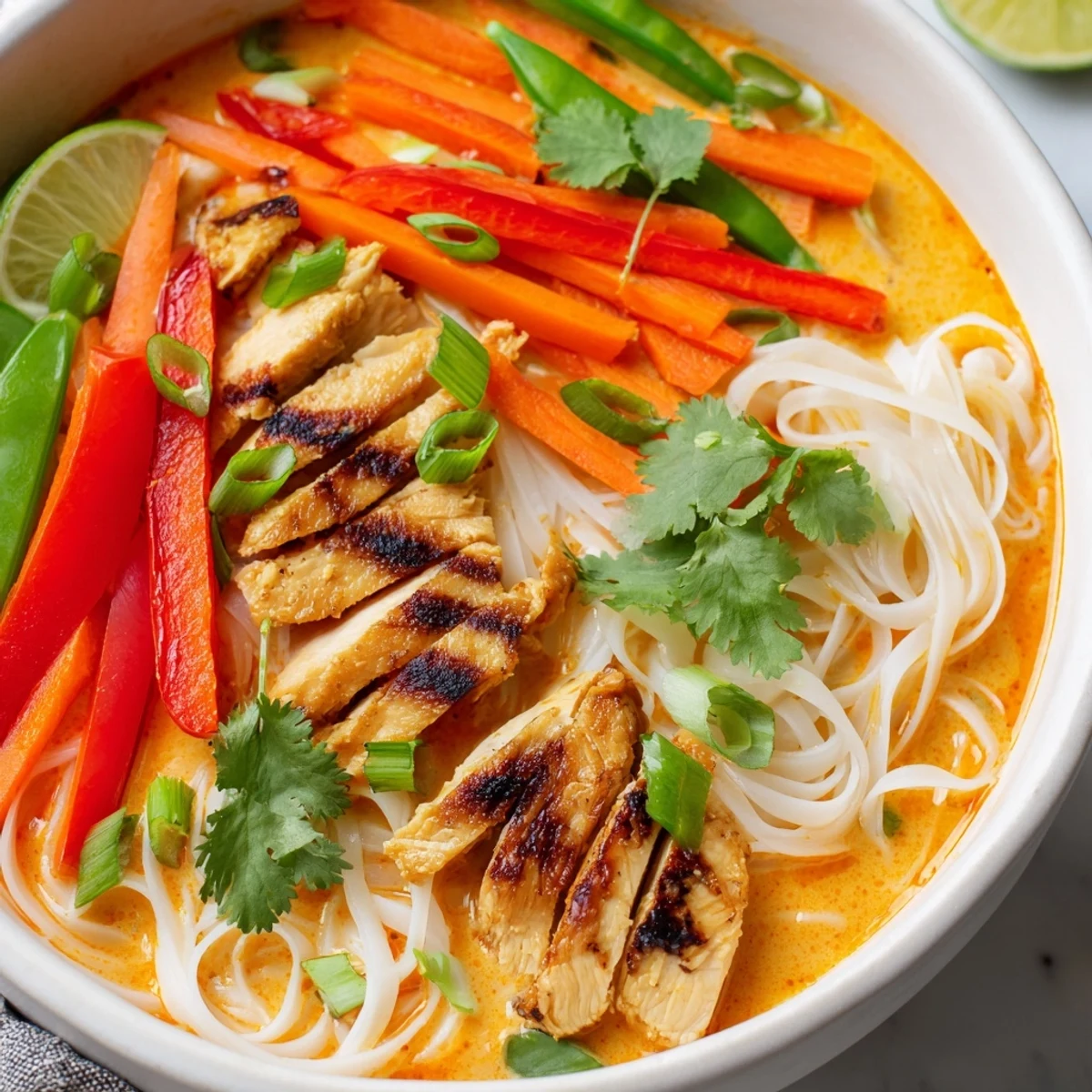
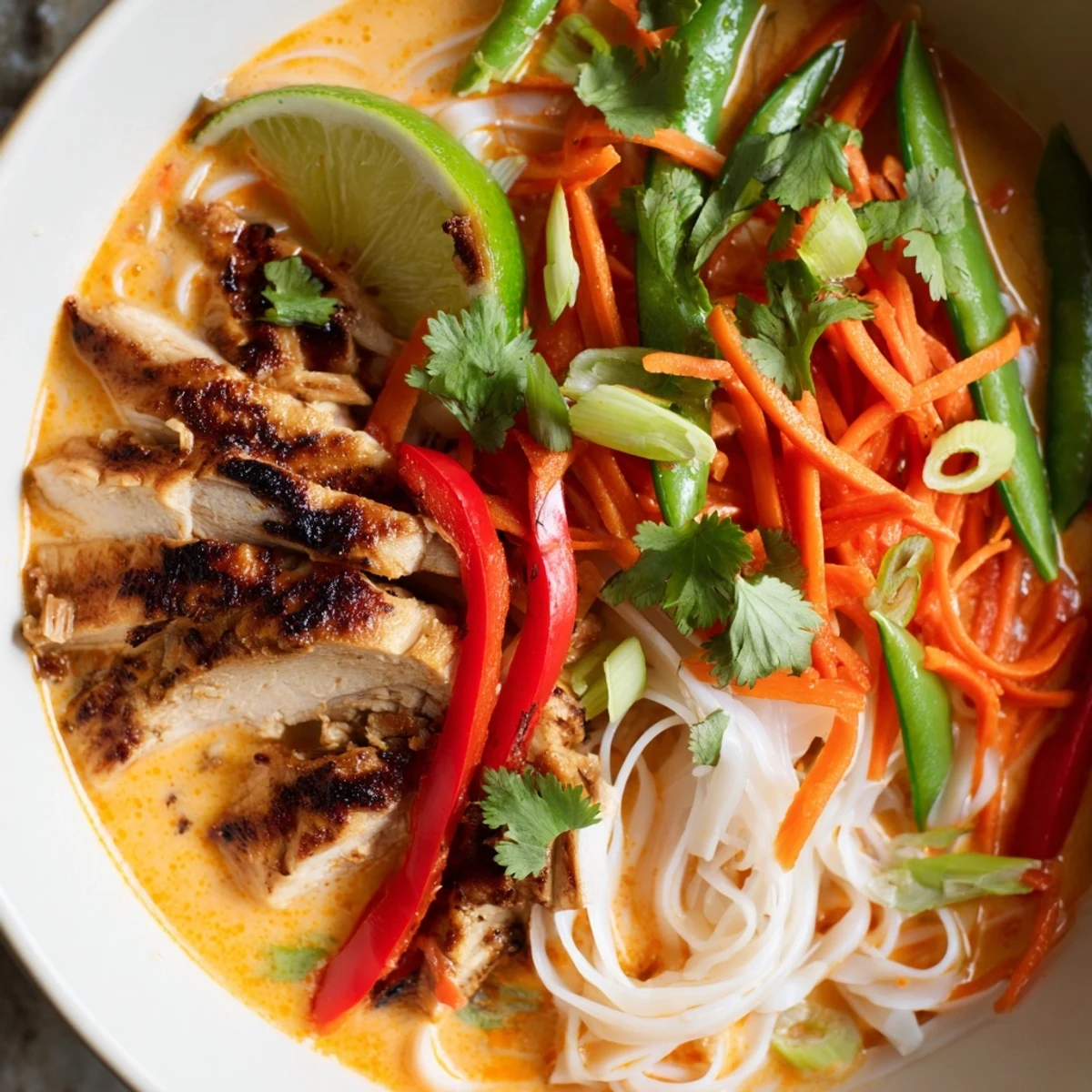
- Ladle soup into bowls so each one gets plenty of broth. Top with sliced chicken, then scatter cilantro, green onions, and a lime wedge on top; the lime wedge is there for people to squeeze in as they eat, adding another layer of freshness.
 Pin it
 There's something about watching someone taste this soup for the first time that never gets old. They close their eyes for a second, taking in that coconut-spice-lime combination, and suddenly the complexity of it clicks into place. It stops being just ingredients and becomes an experience.
The Art of Balancing Heat and Creaminess
The magic of Thai red curry lies in knowing when to lean into spice and when to lean into coconut. If your first taste feels too hot, stir in more broth or coconut milk rather than reaching for ice water—the creaminess soothes heat in a way that's gentle and natural. If it feels flat, a squeeze of lime or a pinch more fish sauce wakes everything up instantly. This soup teaches you that balance isn't about doing everything equally; it's about understanding what your palate needs in that exact moment.
Why Grilled Chicken Changes Everything
Poaching chicken in the broth would be easier, yes, but grilling it first creates a completely different eating experience. Those charred lines add smokiness and texture, so when you bite into the slices, you get contrast—the tender inside against the slightly crisp outside. It's the difference between a soup that tastes nice and one that feels intentional, like someone actually cared about each component.
Adapt This Soup to What You Have
Some nights I've used shrimp instead of chicken, cutting the cooking time in half and shifting the whole flavor profile toward the sea. Other times I've added mushrooms, baby corn, or even cubed tofu for vegetarian guests. The broth is flexible enough to hold whatever proteins and vegetables make sense for your kitchen that day.
- Swap chicken for shrimp, firm tofu, or thinly sliced beef; adjust cooking times accordingly.
- Add texture with mushrooms, baby corn, water chestnuts, or bamboo shoots depending on what appeals to you.
- Make it vegetarian by using vegetable broth and soy sauce instead of fish sauce, and it loses nothing in translation.
 Pin it
 This soup has become my answer to nearly every dinner occasion—casual weeknight when I want something that feels special, or company when I want to cook something that doesn't require me to hover over it constantly. Every bowl tastes like a conversation, warm hands holding a spoon, and the quiet satisfaction that comes from eating something that was made with real thought.
Recipe FAQ
- → What type of noodles work best in this dish?
-
Medium or wide dried rice noodles are recommended for their texture and ability to absorb the rich curry broth.
- → Can I substitute chicken with other proteins?
-
Yes, tofu or other plant-based proteins can replace grilled chicken, especially when using vegetable broth and soy sauce to keep flavors balanced.
- → How do I adjust the spice level?
-
Add more Thai red curry paste or sliced red chili for extra heat, or reduce the paste for a milder flavor.
- → What garnishes complement the flavors best?
-
Fresh cilantro, green onions, lime wedges, and optional red chili slices add brightness and enhance the dish’s aroma.
- → Is this suitable for dairy-free diets?
-
Yes, this dish is dairy-free as it uses coconut milk as the creamy base instead of dairy products.