
 Pin it
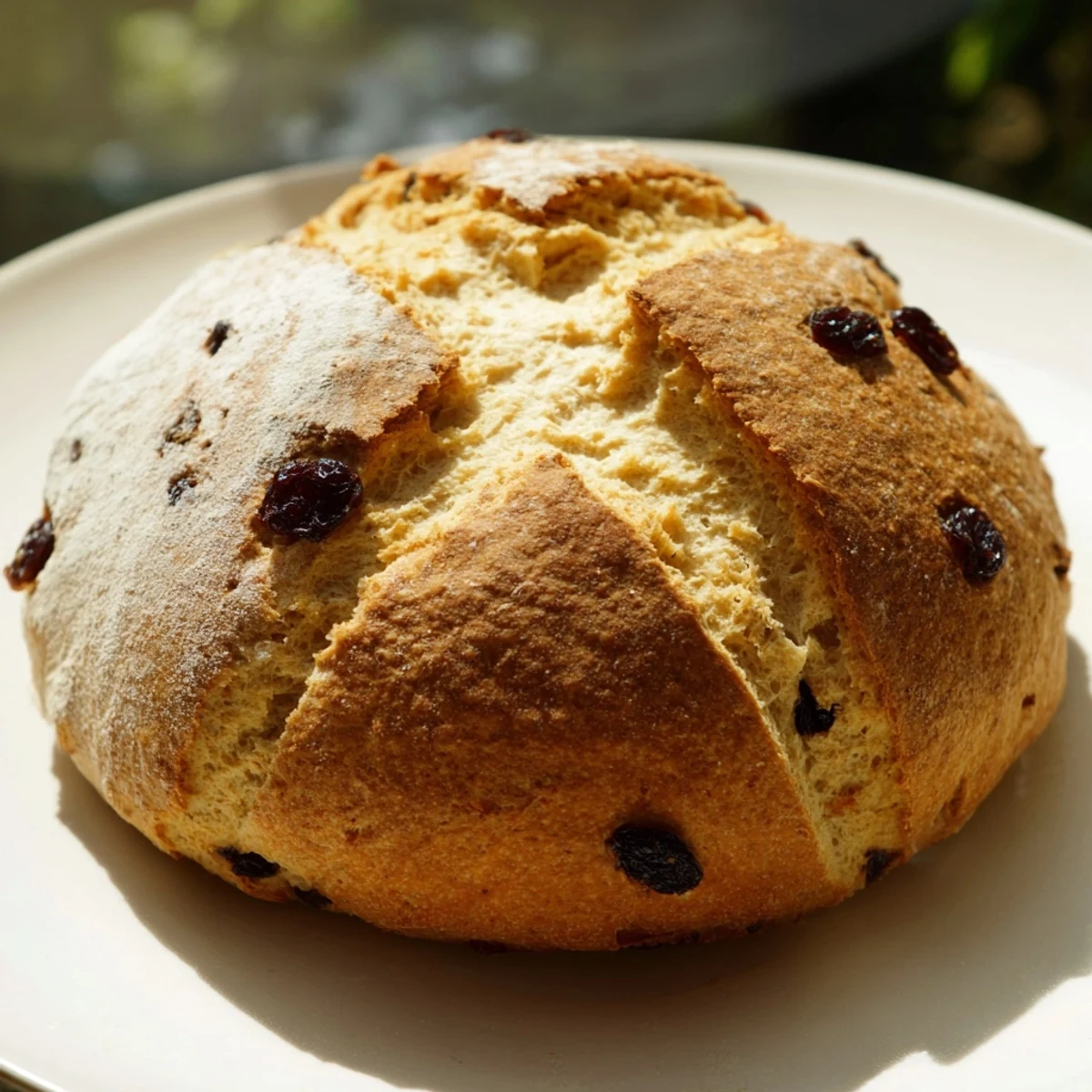
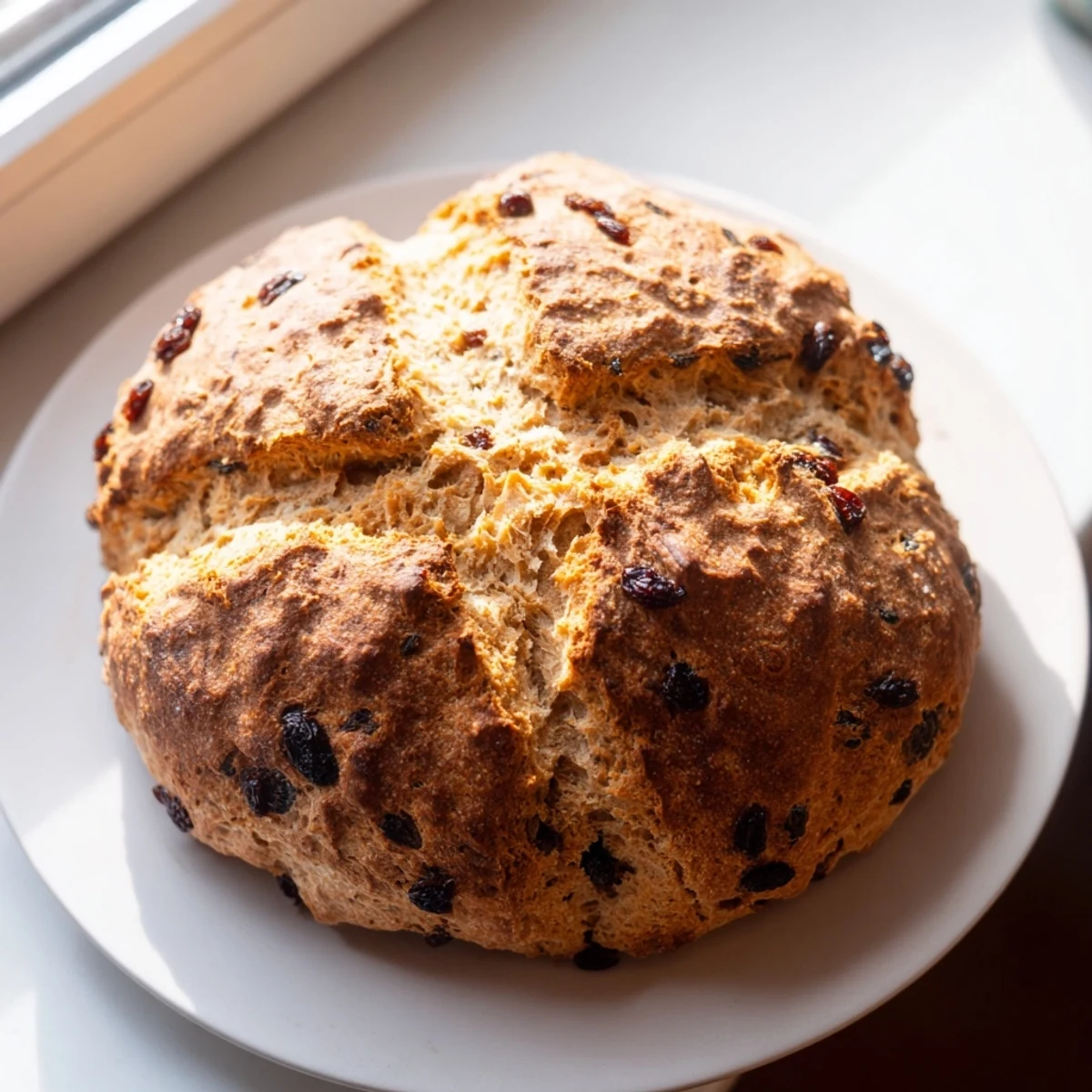
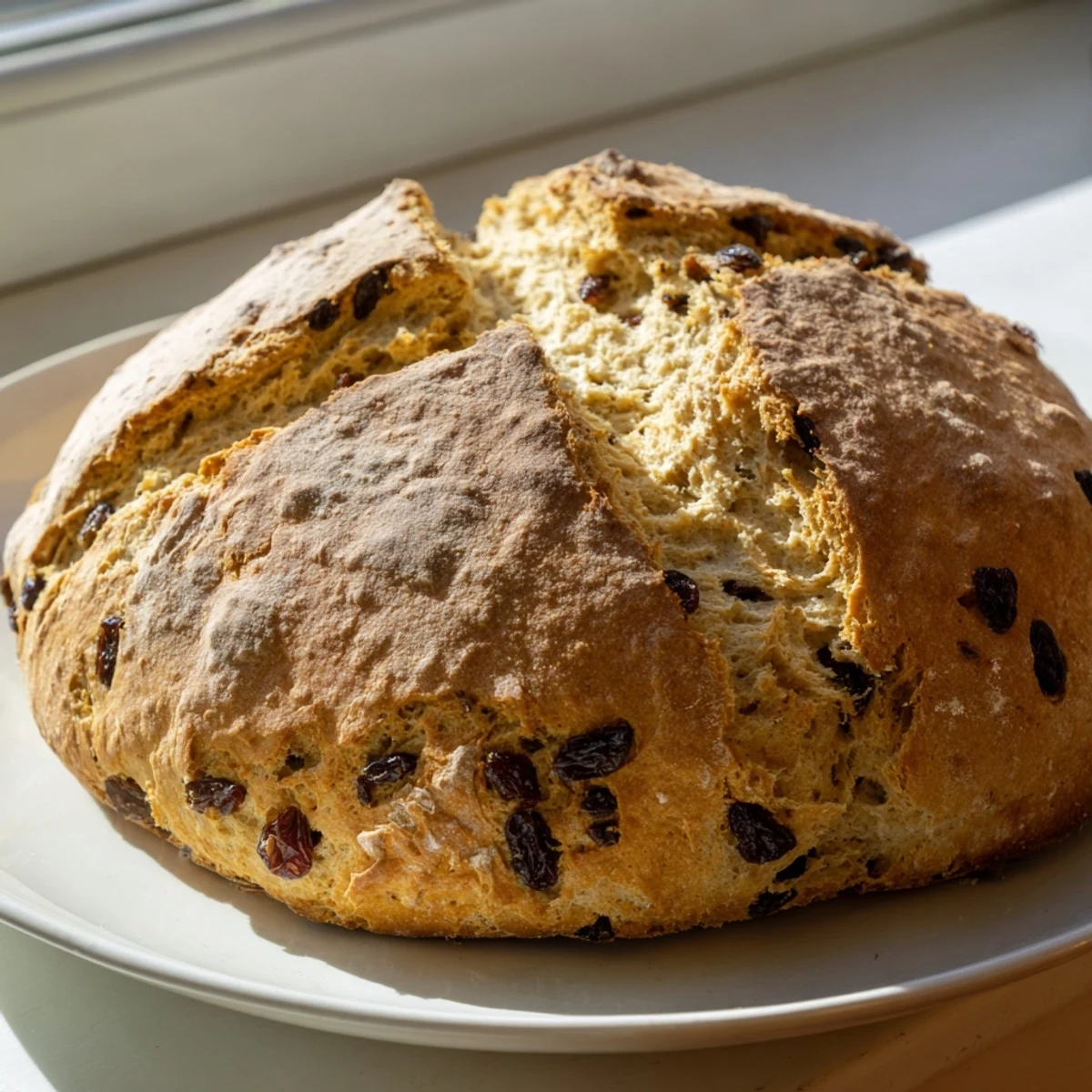
 This Irish soda bread features a golden crust with a tender crumb inside, speckled with juicy raisins for a hint of natural sweetness. Made quickly with flour, baking soda, buttermilk, and butter, it's shaped into a round loaf with a signature cross cut on top to help it rise evenly. Baked until hollow-sounding when tapped, it pairs wonderfully with butter, jams, or hearty soups. Variations include omitting raisins or substituting some flour for whole wheat for a rustic touch.
My flatmate Sarah caught me pressing my ear against a warm loaf of soda bread last March and asked if I was listening for secrets. The truth is, that hollow sound when you tap the bottom of a freshly baked loaf tells you everything you need to know. We ended up eating half the loaf standing at the kitchen counter, butter melting into the warm crust, and I learned that soda bread creates its own kind of magic.
Last year I made this bread for a small gathering and watched my Irish friend is face light up when she took her first bite. She said it reminded her exactly of the loaves her grandmother used to make and that is something I cannot put a price on. We sat around the table tearing off pieces and dunking them into stew while rain tapped against the windows.
Ingredients
- 4 cups (500 g) all-purpose flour: The foundation that gives this bread its structure and crumb
- 1 teaspoon baking soda: The rising agent that reacts with buttermilk to create those beautiful air pockets
- 1 teaspoon salt: Essential for balancing flavor and bringing out the natural sweetness of the wheat
- 2 tablespoons granulated sugar: Just enough to complement the raisins without making it sweet
- 1 cup (150 g) raisins or currants: Little bursts of sweetness throughout every slice
- 1 3/4 cups (420 ml) buttermilk: The acid that activates the baking soda and creates tenderness
- 4 tablespoons (60 g) unsalted butter, melted and cooled: Adds richness and helps create that golden crust we all love
Instructions
- Preheat your oven:
- Get your oven to 425°F (220°C) and line a baking sheet with parchment paper so nothing sticks
- Mix the dry ingredients:
- In a large bowl, whisk together the flour, baking soda, salt, and sugar until they are one happy family
- Add the fruit:
- Stir in the raisins or currants making sure they are evenly distributed throughout the flour
- Bring it together:
- Make a well in the center of your flour mixture and pour in the buttermilk and melted butter, then mix gently until a shaggy dough forms
- Shape the loaf:
- Turn the dough onto a floured surface, knead briefly for about 30 seconds, and shape into a round loaf about 7 inches across
- Mark it:
- Cut a deep X across the top with a sharp knife to let the bread expand beautifully as it bakes
- Bake to golden perfection:
- Bake for 35 to 40 minutes until the loaf is golden and sounds hollow when tapped on the bottom
- Let it rest:
- Cool on a wire rack for at least 20 minutes before slicing because cutting into warm bread is a temptation worth waiting for
 Pin it
 This bread has become our St. Patricks Day tradition, appearing on the table alongside corned beef and colcannon while someone plays Irish music in the background. There is something so grounding about making bread that relies on simple chemistry rather than patience with yeast.
Making It Your Own
Sometimes I leave out the raisins for a more traditional loaf that is perfect for sopping up stews and soups. The plain version has its own quiet dignity and lets the buttery flavor really shine through without any distractions.
Whole Wheat Variation
Substituting half the all-purpose flour with whole wheat gives you a heartier bread with more depth of flavor. The tradeoff is a slightly denser crumb but the nutty notes are worth it, especially if you are planning to serve it with a strong cheese.
Storage And Serving
Soda bread is at its absolute best on the first day while the crust is still crisp and the inside is tender. That said, a day-old loaf toasted with plenty of butter is not exactly a hardship, and it makes excellent breadcrumbs if it lasts that long.
- Wrap the cooled bread tightly at room temperature and try to finish it within two days
- If you must keep it longer, slice and freeze it then toast slices straight from the freezer
- Never store it in the refrigerator because that makes the crust go soft and the crumb dry out faster
 Pin it
 There is something deeply satisfying about a bread that requires no proofing, no waiting, and no special skills beyond a willingness to get your hands a little dusty with flour. May your kitchen always smell like warm bread and your table always be full of friends.
Recipe FAQ
- → What gives this bread its rise without yeast?
-
Baking soda reacts with the acidity in buttermilk, releasing carbon dioxide that helps the bread rise quickly without yeast.
- → Can I omit the raisins in this bread?
-
Yes, leaving out the raisins creates a more traditional savory soda bread with a tender, golden crumb.
- → How do I know when the bread is fully baked?
-
The loaf should be golden brown and sound hollow when tapped on the bottom, indicating it's baked through.
- → What is the purpose of cutting an X on top of the loaf?
-
The deep cross cut allows the bread to expand evenly during baking and is a traditional marking for soda bread.
- → Can I substitute whole wheat flour in this bread?
-
You can replace up to half of the all-purpose flour with whole wheat for a heartier texture and nuttier flavor.